Choosing an AI video model in 2026 is no longer about chasing the one with
the loudest launch. The real buying question is simpler: which model matches
the way your team actually works?
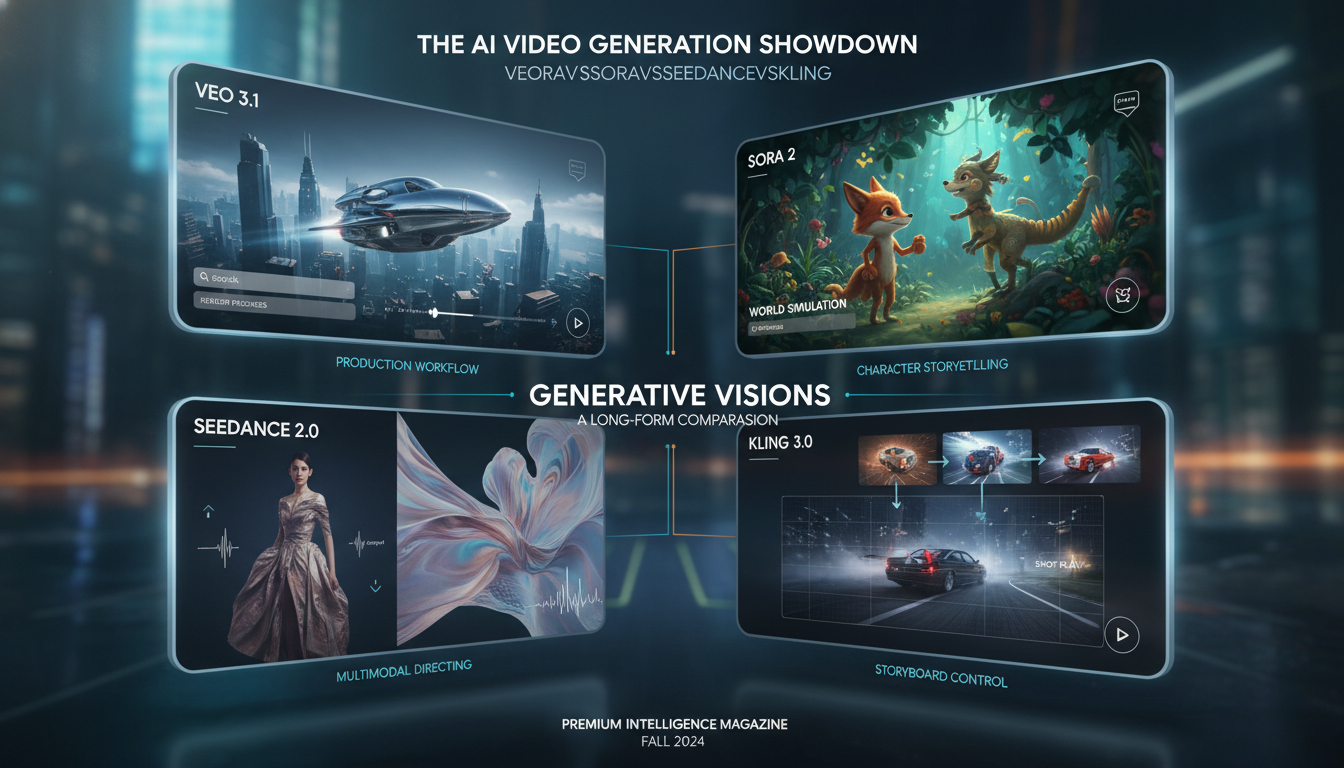
As of March 24, 2026, Veo 3.1, Sora 2, Seedance 2.0, and Kling 3.0 all look
strong on paper. But they are not solving the same problem in the same way.
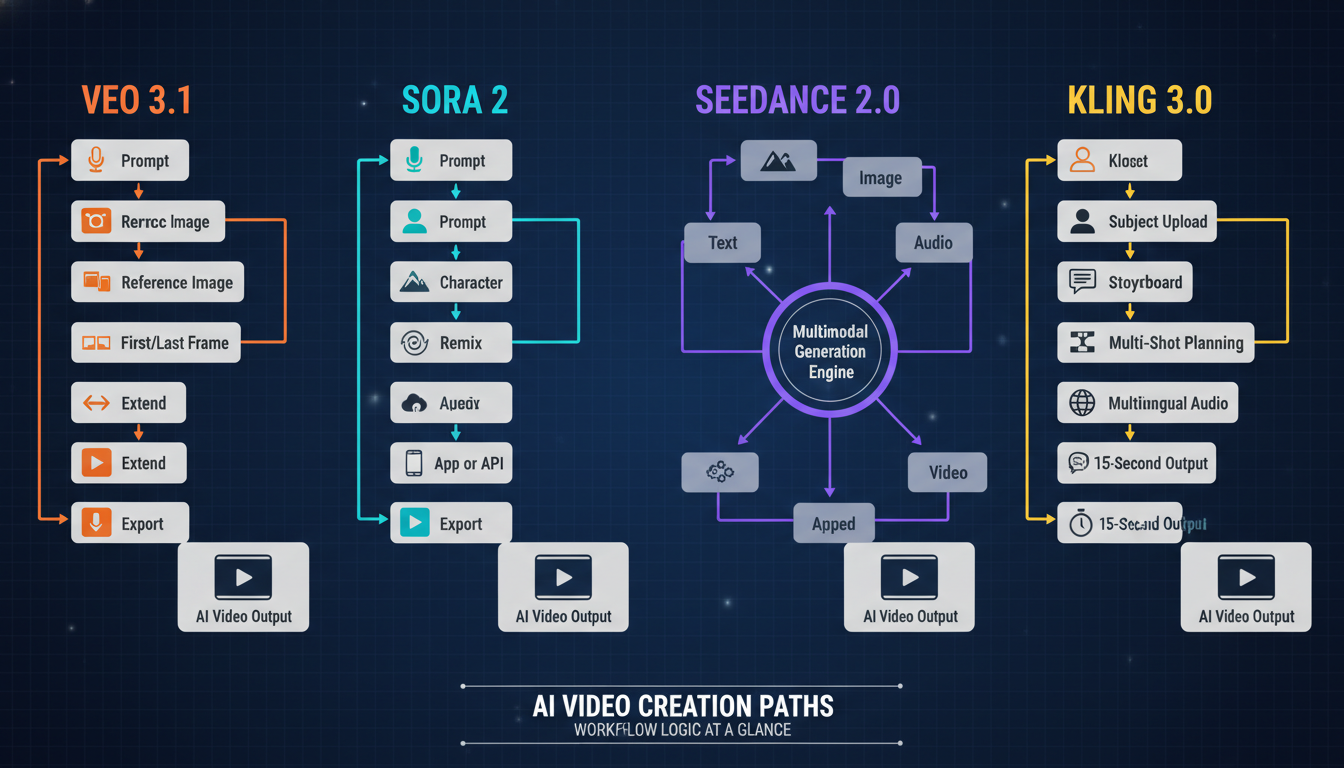
Google is optimizing for a documented, production-friendly video stack.
OpenAI is pushing toward world simulation, characters, and a more social,
remixable experience. ByteDance is leaning hard into multimodal reference and
director-style control. Kuaishou is turning Kling into a more explicit
storyboarding and multi-shot system.
This is an editorial comparison focused on product surfaces, control models,
access paths, and workflow fit as of March 24, 2026. It is not a synthetic
benchmark lab, and that is intentional.
In practice, access path, control surface, and workflow fit matter more than a
vague claim that one model is "best."
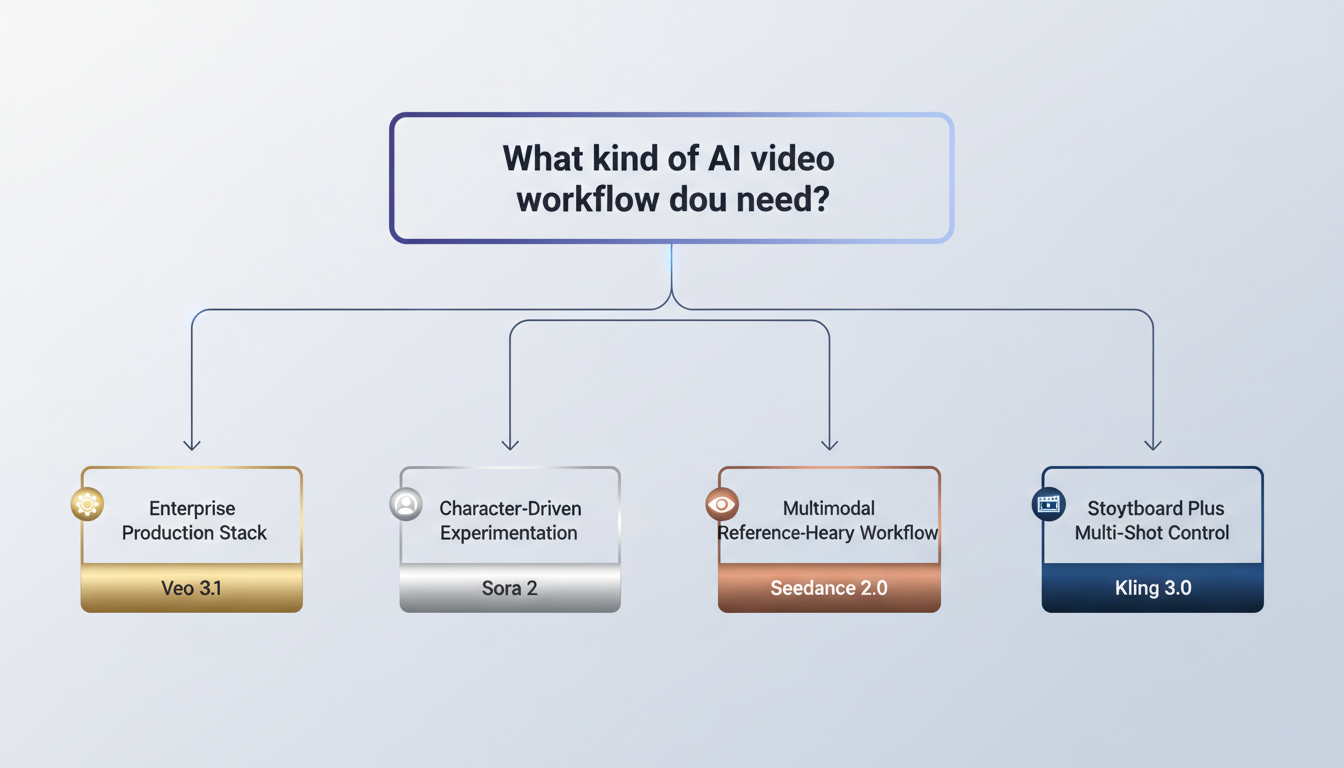
Choose Veo 3.1 if you want the clearest enterprise documentation, the
most straightforward Google-native deployment path, and a conservative
production workflow.
Choose Sora 2 if you want the most ambitious mix of physical realism,
controllability, characters, and creative experimentation across consumer
and API surfaces.
Choose Seedance 2.0 if your workflow starts from multiple references,
not from one perfect prompt.
Choose Kling 3.0 if you think in shots, scenes, storyboards, and
multilingual native audio.
That is the short answer. The rest of this article explains why.
Native audio across languages, dialects, and accents
Directors, agencies, and teams building structured shot sequences
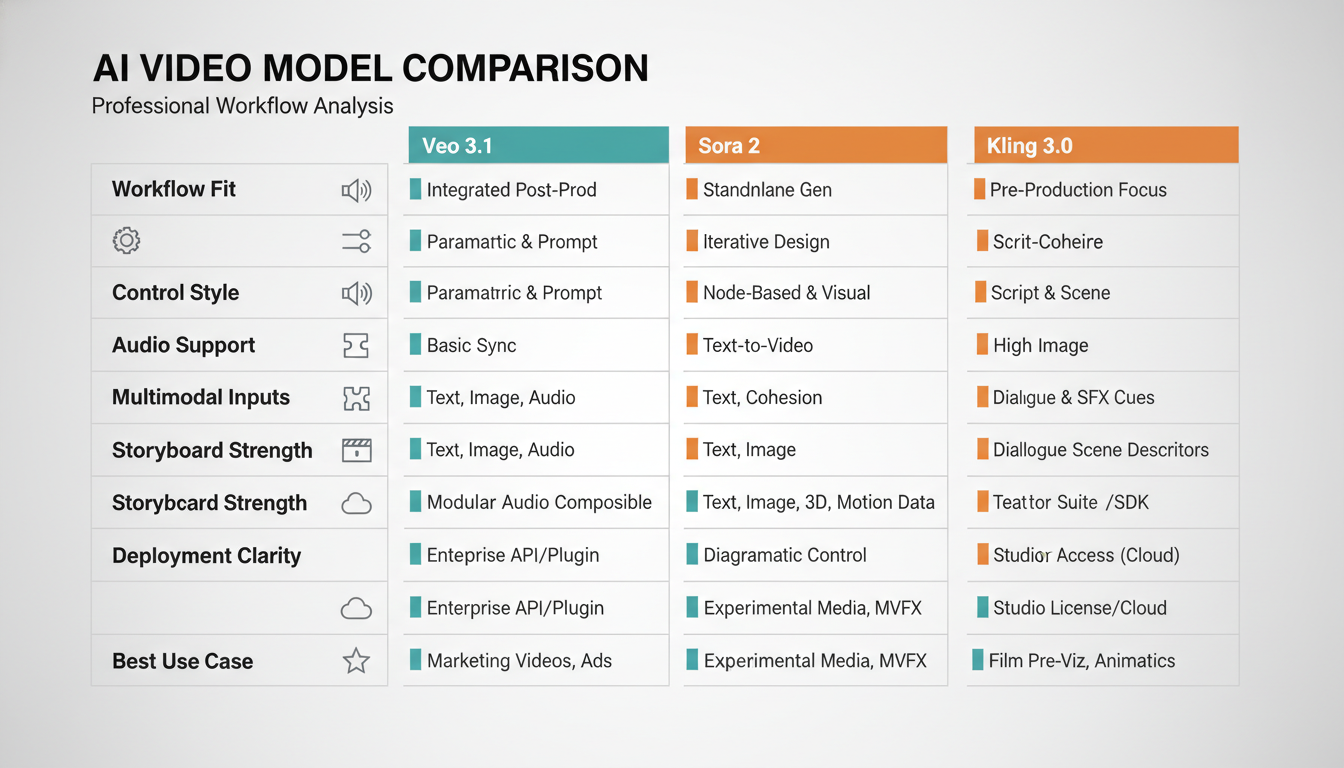
That table already shows the real market split.
Veo 3.1 is the most enterprise-readable option. Sora 2 is the most
conceptually ambitious. Seedance 2.0 is the strongest on multimodal
reference-led creation. Kling 3.0 is the most explicit about directing shots
and narrative flow.
If you are buying for a team, not just for personal experimentation, Veo 3.1
still has a strong case because the workflow is documented more clearly than
most competitors.
Veo currently supports:
text-to-video
image-to-video
first-and-last-frame generation
ingredients-to-video with image references
extend video workflows
insert and remove object workflows
audio and dialogue support
portrait and landscape support
That matters because production teams do not only buy model quality. They buy
predictability. Veo 3.1 gives you a more legible procurement story:
official Google Cloud documentation
official Vertex AI pricing
official model IDs
clear integration paths through Vertex AI, Gemini API, Flow, and related
Google surfaces
This makes Veo 3.1 the most procurement-ready option in this group.
One nuance matters here. Veo's public availability story has two overlapping
layers:
the broader Veo overview says Veo can generate at 720p, 1080p, or 4K
the current model-specific veo-3.1-generate-001 sheet lists 720p
and 1080p for the GA model, while 4K appears on preview endpoints and
selected Veo workflows
That is not a trivial detail. Veo supports 4K in the broader Veo stack, but
not every Veo 3.1 endpoint exposes 4K in the same way. Verify the exact
surface before you promise delivery specs.
Another strength is that the control features are practical rather than flashy.
First-and-last-frame generation and extend workflows are exactly the
kind of tools creative teams use when they want to stabilize a pipeline
instead of gambling on one-shot prompt magic.
If your priorities are:
dependable documentation
clean enterprise access
conservative workflow design
serious integration into an existing stack
Veo 3.1 remains one of the strongest picks in this group.
Sora 2 is official, current, and materially different from the original 2024
Sora launch.
Sora 2 centers on three ideas:
better physical accuracy
stronger controllability
synchronized dialogue and sound effects
That is already enough to make Sora 2 a serious competitor, but the more
interesting part is distribution.
OpenAI is running Sora 2 across multiple surfaces that do not map perfectly to
each other:
a consumer-facing Sora app and web experience
a character-driven creative workflow
an API model page that lists sora-2
This is important because "Sora 2" is not one single buying motion. It is at
least two:
A consumer or creator product built around the Sora app, remixing, feed
behavior, and the characters feature.
A developer product represented by the current API docs, where Sora 2 is
listed as a video model with synced audio and a published per-second price.
That split changes how you evaluate it.
If you are a solo creator or creative lead, Sora 2 offers more than output
quality. OpenAI is building a broader media system, not only a video endpoint.
Characters, likeness control, and remix behavior create a more expressive
ecosystem.
If you are a developer or platform team, Sora 2 currently offers:
text and image input
video and audio output
landscape 1280x720 and portrait 720x1280
priced per generated second
That makes Sora 2 a concrete buying option, not a vague preview.
At the same time, Sora 2 is not the cleanest buyer story in this group. The
product still spans older Sora web help content, the newer Sora 2 app rollout,
and the developer-facing API model. The exact feature set depends on which
Sora surface you are using.
Sora 2 is the right choice when you care most about:
physically plausible motion
experimental storytelling
character-based creation
OpenAI-native creative workflows
It is less compelling if your first requirement is a frictionless enterprise
rollout with one perfectly consistent public spec sheet.
Many commercial video tasks do not start from a blank prompt. They start from:
an existing reference reel
a product video clip
a voice reference
a mood board
a soundtrack
an image board approved by brand stakeholders
Seedance 2.0 aligns directly with that reality. The product gives teams
director-level control: it steers performance, camera movement, lighting, and
visual continuity from more than one kind of source material.
That makes Seedance 2.0 especially compelling for:
brand teams with existing creative assets
agencies working from client references
music-driven workflows
creators who want to control generation with assets, not only with prose
There is one caveat, and it is an important one. Public English-language
Seedance pages are strong on positioning, but they are less granular than
Google or OpenAI on visible specs. The English-facing pages are explicit about
multimodal inputs and audio-video joint generation, but less explicit about
the exact public resolution, duration, and pricing matrix you might want for
procurement.
That changes the buying process. If your team is serious about standardizing
on Seedance 2.0, verify the exact commercial tier, region, and runtime limits
inside the relevant Seed or Volcano Engine surface before committing.
Directly: Seedance 2.0 is the strongest creative fit for reference-heavy
teams, while Veo 3.1 is easier to evaluate from public documentation alone.
Kling 3.0 has moved beyond the "another AI video model" bucket.
Kling 3.0 is now explicitly built around narrative control. The strongest
signals are:
native audio generation across multiple languages, dialects, and accents
video duration up to 15 seconds
scene transitions and multi-shot generation
customizable storyboarding
stronger subject and element consistency
fully available 3.0 series API documentation
Kling 3.0 belongs in enterprise and agency evaluations.
It is not only chasing visual quality. It is clearly trying to solve a
director's workflow:
define a sequence, not only a clip
maintain subject consistency
support multiple shots
support multilingual speech
keep text and branded elements readable
That last point is especially relevant for commercial work. Kling 3.0 preserves
text in imagery more reliably, which is highly useful for:
e-commerce video
product explainers
retail promotion
captioned social ads
branded signage inside scenes
Kling 3.0 also has a sharper public claim on multi-shot control than the other
three models in this comparison. Veo 3.1 is better documented for production.
Sora 2 is more conceptually ambitious. Seedance 2.0 is more reference-heavy.
But Kling 3.0 is the clearest pick if you want to think in terms of a
storyboard, not just a prompt.
The main watch-out is access. The 3.0 models launched first for Ultra
subscribers before broader public expansion, even while the API documentation
is already live. So, as with Sora 2, model existence is not the same thing as
universal access on every surface.
One of the biggest 2026 buying traps is confusing a model announcement with a
fully standardized product surface.
Buying question
Veo 3.1
Sora 2
Seedance 2.0
Kling 3.0
Public enterprise docs
Strong
Mixed across app and API surfaces
More limited in English-facing public materials
Stronger than before, especially on API side
Public pricing clarity
Strong on Vertex AI
Clear on API page, less unified across consumer surfaces
Public positioning is clearer than public pricing detail
Access and commercial details depend on surface
Surface consistency
Relatively high
Medium
Medium
Medium
Procurement confidence from public docs alone
High
Medium
Medium
Medium-high
Veo 3.1 wins this section.
Google gives buyers the clearest documentation trail. For agencies and
in-house teams, that matters more than social buzz.
Sora 2 is also easy to understand once you read the surfaces correctly. It is
officially documented, but it spans a more complex mix of app, web, and API
experiences.
And this is where Seedance 2.0 and Kling 3.0 split. Seedance 2.0 is stronger
as a reference philosophy. Kling 3.0 is stronger as a published directing
surface.
you want explicit shot structure and multi-scene planning
multilingual voice output is important
you need longer clips and stronger directorial control
readable text and branded elements inside scenes matter commercially
There is one more practical layer to this decision.
If you do not want your workflow to break every time the market shifts from
one frontier model to another, use a platform that lets you compare and
operationalize these capabilities in one place.
That is the most practical reason to use Veo 4:
it works as a one-stop AI creation platform, which makes it easier to test
different generation styles, creative directions, and production workflows
without rebuilding your stack around each new model release.
No. 4K exists in the broader Veo workflow, but the current model-specific Veo
3.1 GA sheet still separates some of that behavior from preview endpoints and
selected surfaces. Verify the exact endpoint you plan to use.
Veo 3.1 vs Sora 2 vs Seedance 2 vs Kling 3.0: Which AI Video Model Should You Use in 2026?
The Short Answer
What Each Model Is Actually Optimizing For
Veo 3.1 Is Still the Safest Production Bet
Sora 2 Is the Most Ambitious Creative System, but Its Surfaces Matter
Seedance 2.0 Is the Best Fit for Reference-Led Creation
Kling 3.0 Is the Strongest Choice for Shot Planning and Narrative Control
The Real Decision Framework: Quality Is Only One Axis
Availability Differs Across Surfaces
So Which Model Should You Actually Choose?
Choose Veo 3.1 if:
Choose Sora 2 if:
Choose Seedance 2.0 if:
Choose Kling 3.0 if:
Final Verdict
FAQ
Is Sora 2 an official model?
Which model is easiest to operationalize for a team today?
Which model is strongest if I already have lots of source assets?