Google's Nano Banana series has revolutionized AI image generation, but choosing between Nano Banana 2, Nano Banana Pro, and the original Nano Banana can be confusing. This comprehensive guide breaks down everything you need to know about these three models, helping you make the right choice for your creative workflow.
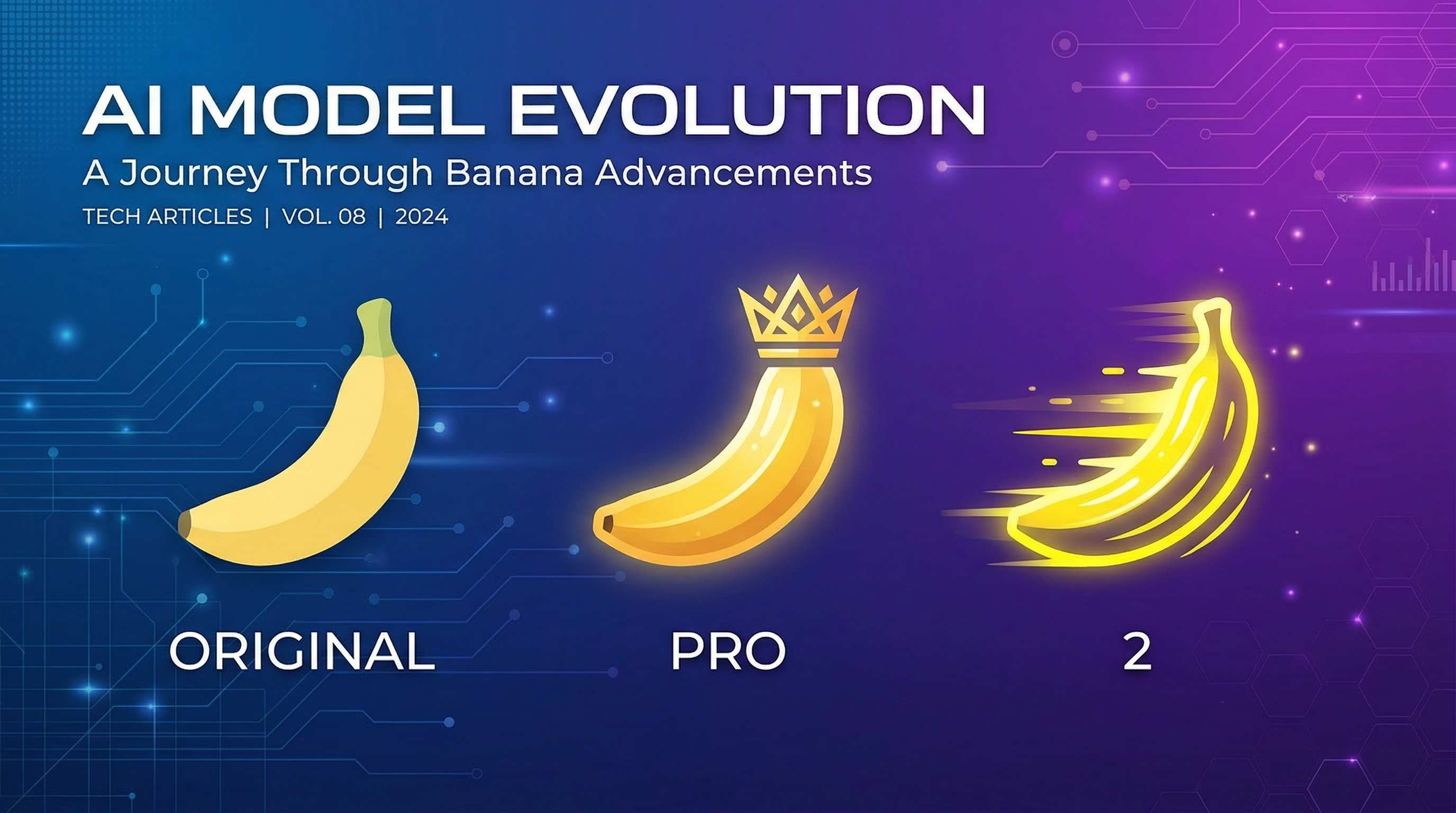
The Nano Banana series represents Google DeepMind's evolution in AI image generation technology. Each model serves distinct purposes, built on different versions of the Gemini architecture. The original Nano Banana introduced fast, creative image generation to the masses. Nano Banana Pro elevated quality to studio-level standards. Now, Nano Banana 2 bridges the gap, combining Pro-level features with Flash-tier speed.
Understanding which model fits your needs requires looking beyond marketing claims. Real-world performance, pricing structures, and specific feature sets determine which tool delivers the best value for your particular use case.
The original Nano Banana, built on Gemini 2.5 Flash Image, prioritized speed and accessibility. It delivered creative visuals quickly, making AI image generation feel almost magical for everyday users. The model excelled at straightforward text-to-image generation with decent quality for social media posts, quick mockups, and exploratory creative work.
However, the original model had notable limitations. Text rendering was inconsistent, character consistency across multiple images proved challenging, and complex compositional requests often produced unpredictable results. The success rate for iterative edits hovered around 60%, meaning asking to "make the sky bluer" might also randomly change the subject's clothing or reposition objects.
Nano Banana Pro, powered by Gemini 3 Pro, represents Google's flagship reasoning model applied to image generation. This architecture grants the model deeper reasoning capabilities, enabling it to "think through" the entire generation process. Pro considers spatial relationships, lighting physics, composition rules, and creative intent before rendering.
This deliberate approach produces superior results for complex scenes. When your prompt involves eight objects with specific spatial relationships, layered lighting, and a particular mood, Pro's extra reasoning depth manifests as more accurate placement and coherent interactions between elements. The model delivers much clearer typography for headlines and product names, better letter structure for logos and labels, and more stability when regenerating variations with the same copy.
Nano Banana Pro can also connect to Google Search's vast knowledge base to create quick snapshots for recipes or visualize real-time information like weather or sports data. When asked for "Times Square at New Year's Eve," Pro renders something that actually looks like Times Square with recognizable billboards and architecture, rather than a generic busy urban scene.
Nano Banana 2, built on Gemini 3.1 Flash Image, represents Google's strategy of bringing Pro-level capabilities to the Flash architecture. This model reasons about your prompt but does so at Flash-tier speed, resulting in 2-3x faster generation with good compositional accuracy in most real-world scenarios.
Nano Banana 2 brings the high-speed intelligence of Gemini Flash to visual generation, making rapid edits and iteration possible. It makes once-exclusive Pro features accessible to a wider audience, including advanced world knowledge that pulls from Gemini's real-world knowledge base and is powered by real-time information and images from web search to more accurately render specific subjects.
Subject consistency represents one of the most significant improvements across the Nano Banana evolution. The original Nano Banana struggled to maintain character resemblance across multiple images, making it difficult for creators working on comics, storyboards, or brand campaigns with recurring characters.
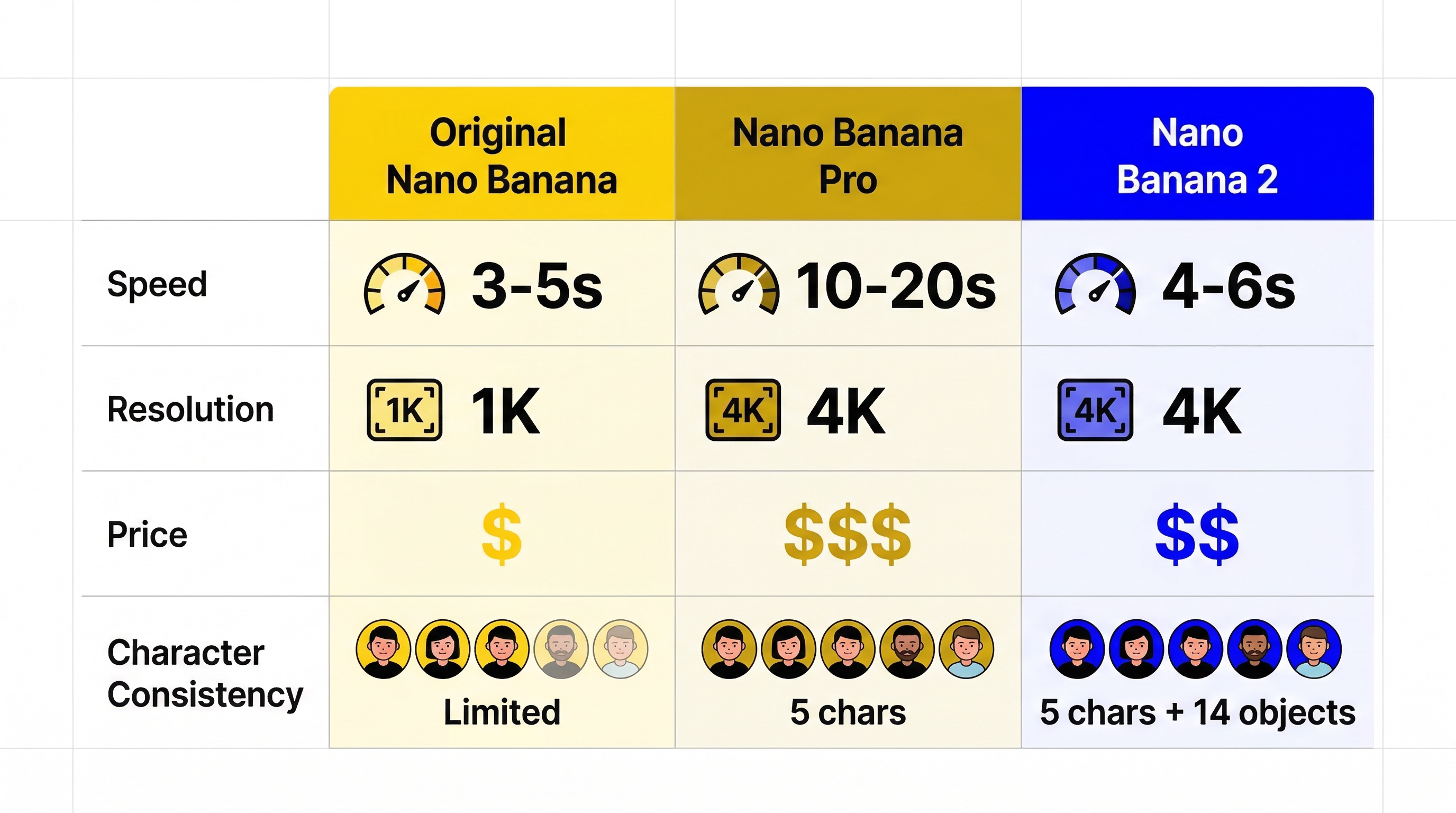
Nano Banana 2 can maintain character resemblance of up to five characters and the fidelity of up to 14 objects in a single workflow, allowing you to storyboard and build narratives without altering the appearance of your inputs. This capability proves invaluable for comic creators, brand teams, and social media campaigns built around recurring characters.
Nano Banana Pro offers similar character consistency capabilities with enhanced stability for portrait angles (front, three-quarter, profile) that still look like the same person. For projects requiring absolute consistency across dozens of images, Pro's deeper reasoning provides slightly more reliable results.
Text rendering separates casual image generation from production-ready creative work. The original Nano Banana produced inconsistent text, making it unsuitable for any project requiring readable typography.
Nano Banana Pro was built to handle text as a first-class element inside the image. In practice, this means much clearer typography for short headlines and product names, better letter structure for Latin characters in logos, labels, UI elements, and packaging, and more stability when regenerating variations with the same copy. Pro excels at UI and dashboards, screens, panels, and interface mockups where text must be legible enough for presentation.
Nano Banana 2 inherited these text rendering improvements, delivering accurate text that makes visuals immediately understandable. This capability proves essential when you want images that communicate information correctly, particularly for infographics, data visualizations, and marketing materials with embedded text.
Enhanced instruction following represents a critical advancement in Nano Banana 2. The model adheres more strictly to complex requests, capturing the specific nuances of your idea so the image you get is the image you asked for. This improvement addresses one of the original Nano Banana's most frustrating limitations: unpredictable interpretation of detailed prompts.
Nano Banana Pro delivers more stable multi-turn editing. When you ask for specific changes, Pro modifies only what you requested without introducing unwanted alterations. This precision proves crucial for client work where specific revisions must be implemented without disrupting approved elements.
Output control distinguishes professional tools from consumer experiments. Nano Banana 2 supports aspect ratios and resolutions from compact 512px outputs all the way to 4K, ensuring your visuals stay sharp whether they're for a vertical social post or a wide-screen backdrop. The model offers full control of various aspect ratios and resolutions, making attention-grabbing assets production-ready.
Nano Banana Pro provides similar resolution capabilities with 14 supported aspect ratios, including standard formats like 1:1, 16:9, 9:16, and more specialized ratios like 21:9 for cinematic compositions.
Visual fidelity determines whether generated images look amateurish or professional. Nano Banana 2 delivers vibrant lighting, richer textures, and sharper details, maintaining high-quality aesthetics at the speed expected from Flash. This upgrade makes the model suitable for client presentations, marketing campaigns, and social media content where visual quality directly impacts brand perception.
Nano Banana Pro offers the highest visual fidelity in the series, with advanced lighting controls that allow you to obscure or enlighten sections of your image with specific dramatic effects. Pro can generate images with intense chiaroscuro effects, directional lighting, and sophisticated shadow work that mimics professional photography and cinematography.
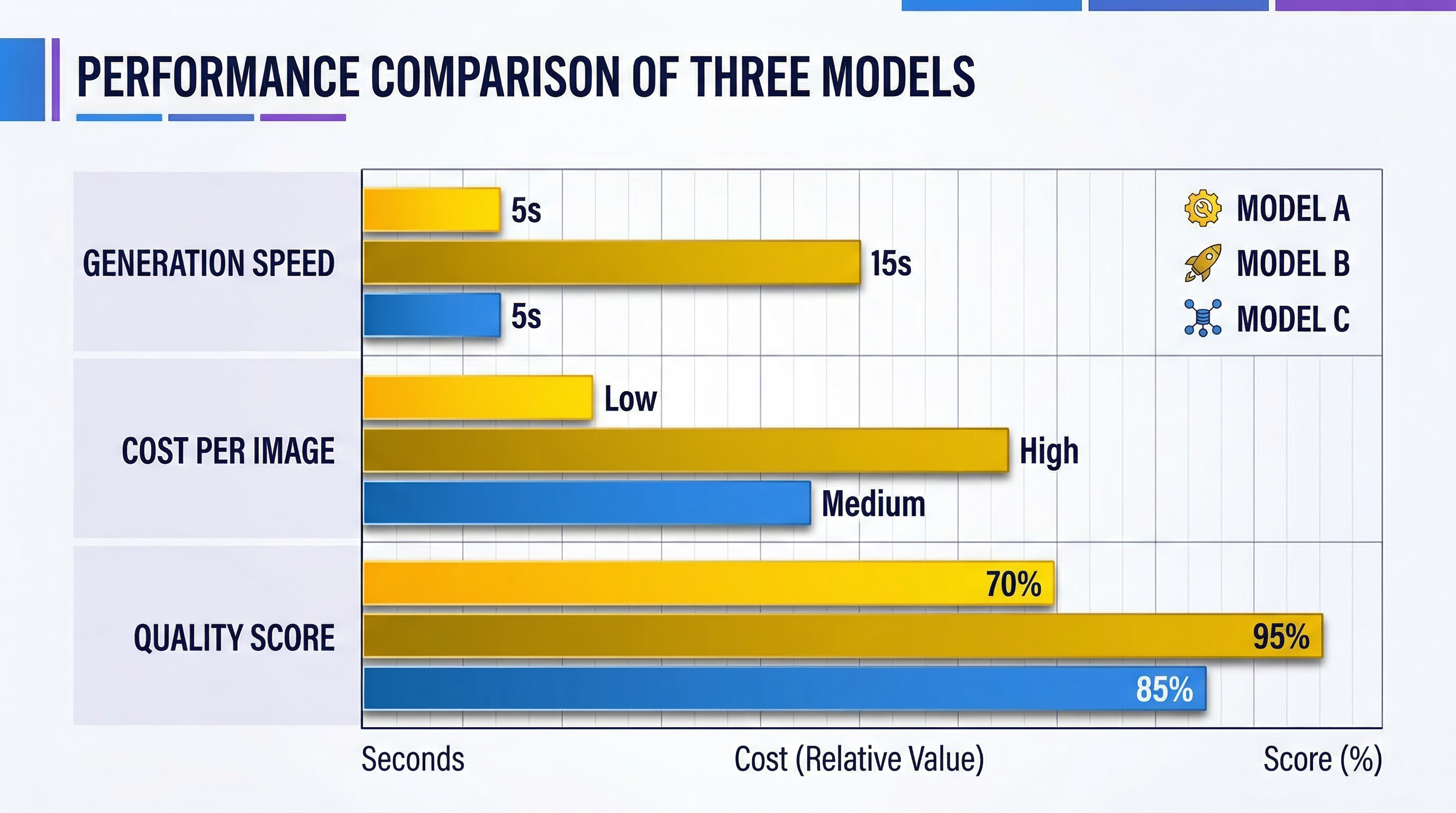
Speed directly impacts creative workflow efficiency. Under standard conditions with the same prompt complexity at 1K resolution, Nano Banana 2 generates images in 4-6 seconds per image, optimized via Flash architecture. This represents a significant speed advantage for iterative creative work.
Nano Banana Pro typically generates an image in 10-20 seconds, depending on prompt complexity and resolution. Google optimized Pro for quality rather than speed metrics, accepting longer generation times in exchange for superior reasoning and compositional accuracy.
The original Nano Banana delivered the fastest generation times in the series, typically producing images in 3-5 seconds. However, this speed came at the cost of quality, consistency, and advanced features.
For rapid iteration and exploration, Nano Banana 2 offers the optimal balance. You can generate multiple variations quickly, test different concepts, and refine your vision without waiting. This speed advantage proves particularly valuable during brainstorming sessions, client presentations where real-time adjustments are needed, and high-volume content creation for social media.
Nano Banana Pro suits workflows where each image represents a significant investment. When creating hero images for marketing campaigns, final assets for print publications, or portfolio pieces that showcase your creative capabilities, Pro's additional processing time delivers proportional quality improvements.
Cost considerations significantly impact tool selection, especially for high-volume users. Nano Banana 2 offers tiered pricing based on resolution: approximately $0.101 per generation at standard resolution, with a new ultra-low-cost 0.5K tier showing Google's aggressive targeting of the high-volume API market.
Nano Banana Pro costs approximately $0.134 per generation at comparable resolution, reflecting its premium positioning and higher computational requirements. For users generating 500 images daily, this translates to meaningful cost differences: using Pro costs approximately $67/day ($2,010/month), while using Nano Banana 2 costs approximately $50.5/day ($1,515/month).
Third-party platforms like APIYI offer flat rates as low as $0.03 per generation regardless of resolution, potentially saving 55-80% compared to official pricing for batch generation scenarios.
For consumers and students, Google provides limited free quotas for Nano Banana 2 through the Gemini app. After exhausting free quotas, users revert to the original Nano Banana model. Google AI Plus, Pro, and Ultra subscribers receive higher quotas, with Ultra subscribers getting the most generous allocation.
This tiered access structure allows casual users to experiment with advanced features while encouraging power users to subscribe for consistent access to premium capabilities.
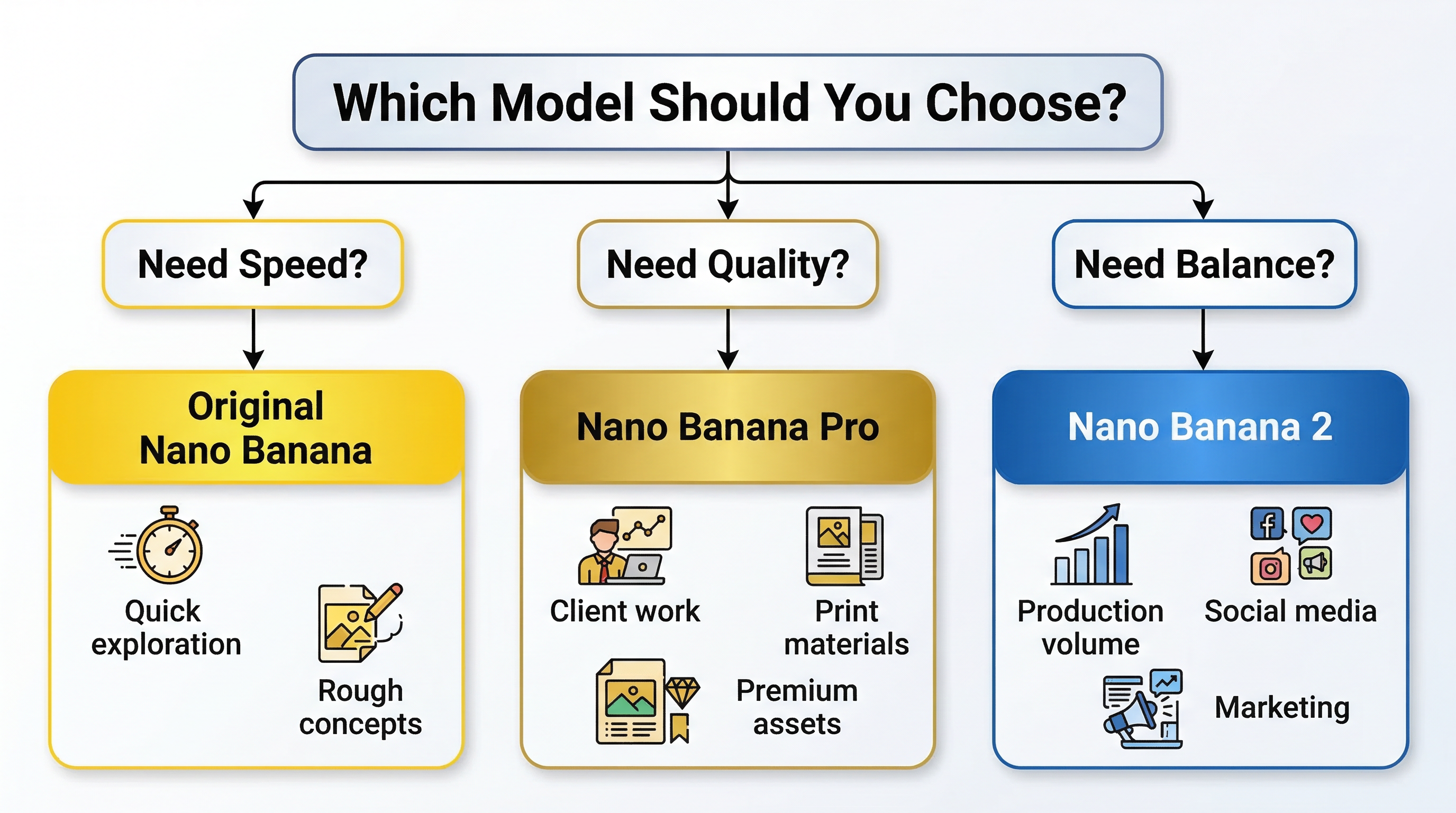
The original Nano Banana remains relevant for specific scenarios. Choose this model when you need the absolute fastest generation for rough concept exploration, when quality requirements are minimal and speed is paramount, for personal projects where professional polish isn't necessary, or when working within strict budget constraints that prohibit premium model usage.
The original model's simplicity and speed make it ideal for rapid brainstorming sessions where you're generating dozens of variations to find a creative direction.
Nano Banana Pro justifies its premium positioning for demanding creative work. Select Pro when you need the absolute best quality for a specific image, when creating high-value assets like hero images for marketing campaigns, commercial advertisements, or professional portfolio pieces. Pro proves essential when text must appear correctly in images, particularly for packaging design, infographics with embedded data, or UI mockups requiring legible typography.
Pro's advanced camera controls, lighting manipulation, and superior compositional reasoning make it the clear choice for complex multi-subject scenes with strict consistency requirements, print materials where resolution and detail are critical, and client deliverables where quality directly impacts professional reputation.
Nano Banana 2 represents the sweet spot for most professional creative workflows. This model excels for production-volume content creation where both quality and speed matter, social media campaigns requiring consistent visual quality across multiple posts, iterative design processes where rapid feedback cycles accelerate creative development, and marketing materials that need professional polish without Pro's processing time.
Nano Banana 2's balanced approach makes it ideal for teams creating content at scale, agencies managing multiple client projects simultaneously, and creators who need good-enough quality for most use cases with higher throughput for batch and API-driven workflows.
Nano Banana 2 introduces enhanced multi-image compositing capabilities, allowing you to combine reference images with text prompts for more controlled generation. This feature enables style transfer, character consistency across scenes, and compositional guidance that produces more predictable results.
Nano Banana Pro offers similar reference image capabilities with slightly more sophisticated interpretation of complex reference combinations. When working with multiple style references simultaneously, Pro's deeper reasoning helps balance competing visual influences more effectively.
Image Search Grounding represents an exclusive feature currently available only in Nano Banana 2, suggesting that the Flash architecture might host more innovative features in the future. This capability allows the model to pull visual information directly from web search results, enhancing accuracy for specific subjects, locations, and real-world objects.
This grounding technology proves particularly valuable for creating infographics with current data, visualizing specific locations with architectural accuracy, and rendering recognizable products or brands within generated images.
Both Nano Banana 2 and Pro support iterative editing within conversations, but with different performance characteristics. Nano Banana 2 handles most iterative edits efficiently, maintaining context across multiple revisions while preserving elements you want to keep unchanged.
Nano Banana Pro delivers more stable multi-turn editing with higher success rates for complex revision requests. When you need to make five sequential adjustments to a single image, Pro's superior context retention minimizes the risk of unwanted changes accumulating across iterations.
Nano Banana 2 is now the default image generation model in the Gemini app, replacing the previous Pro model for most users. The model is also available in Google Search (AI Mode and Lens), AI Studio for testing, and through the Gemini API for developers. Google is rolling this out across Gemini apps, Search in AI mode, Lens, Flow, Google Ads, and Vertex AI via the cloud, covering over 140 countries and multiple new languages.
Nano Banana Pro remains accessible to AI Pro and Ultra subscribers through the "Regenerate with Nano Banana Pro" option found in the image's three-dot menu. This preserved access ensures power users can still leverage Pro's superior capabilities when needed.
For developers and automated workflows, both Nano Banana 2 and Pro are available through the Gemini API with comprehensive documentation. The API provides full control over parameters including resolution, aspect ratio, style guidance, and reference image handling.
Third-party platforms like fal.ai, WaveSpeedAI, and others offer alternative API access with different pricing structures and additional features like enhanced batch processing and workflow automation.
The most effective strategy combines multiple models strategically. Start with Nano Banana 2 for ideation and rapid iteration, generating multiple concept variations quickly to explore creative directions. Once you identify promising concepts, refine them further in Nano Banana 2, taking advantage of its good quality and fast iteration speed. When you've finalized your concept and need the absolute best quality for final delivery, regenerate the image using Nano Banana Pro.
This hybrid approach gives you the best of both worlds: speed during exploration and quality for final output, while optimizing costs by using Pro only when its superior capabilities justify the additional expense.
Regardless of which model you choose, prompt quality significantly impacts results. Be specific in your prompts, describing not just what you want but how you want it rendered. Specify characters, objects, angles, lighting, and even text within the image when relevant.
For character consistency, use the dedicated character consistency feature for series of related images. Experiment with different aspect ratios for your specific use case, as the right format can dramatically improve compositional effectiveness.
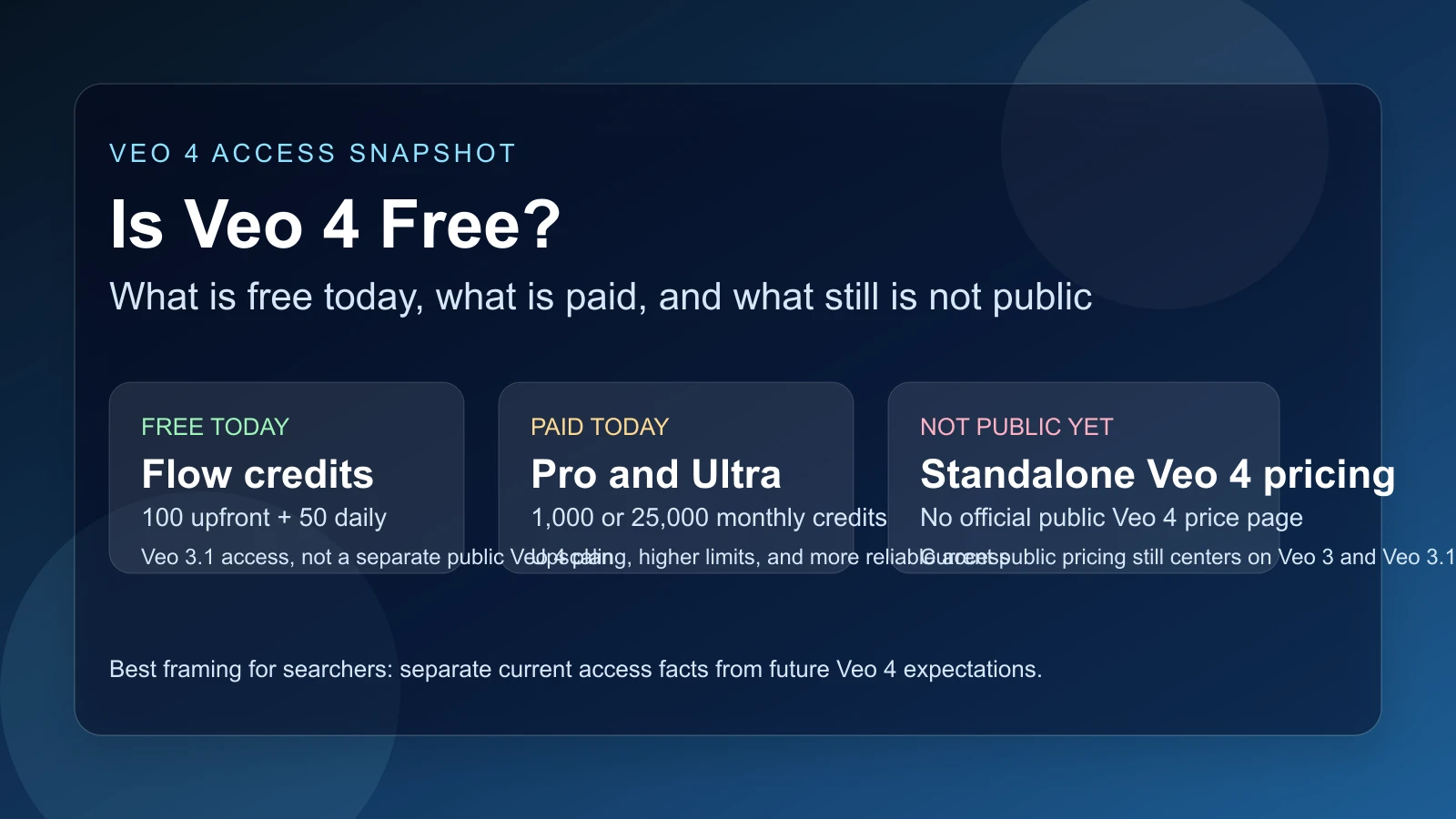
While understanding the differences between Nano Banana models helps you make informed choices, accessing these tools efficiently matters just as much. Veo 4 offers a comprehensive solution that integrates and supports multiple cutting-edge video and image generation models, including the entire Nano Banana series, providing a one-stop AI creation experience with exceptional convenience.
With Veo 4, you can seamlessly switch between Nano Banana 2 for rapid iteration, Nano Banana Pro for premium quality output, and other advanced AI models without managing multiple platforms, API keys, or billing systems. This unified approach streamlines your creative workflow, allowing you to focus on creation rather than technical integration.
Veo 4 provides access to these powerful models through an intuitive interface designed for creators, not just developers. Whether you're generating images for marketing campaigns, creating visual content for social media, or developing professional client deliverables, Veo 4 simplifies the entire process. Explore Veo 4's capabilities and discover how it can transform your AI-powered creative workflow at Veo 4 Nano Banana, Veo 4 Nano Banana 2, and Veo 4 Nano Banana Pro.
Google applies SynthID watermarks to all Nano Banana 2 outputs. These invisible markers identify images as AI-generated without compromising visual quality. Since its November launch, the SynthID verification feature in the Gemini app has been used over 20 million times across various languages.
This watermarking technology addresses growing concerns about AI-generated content authenticity, providing a technical solution for identifying synthetic media while preserving creative flexibility.
Google is implementing C2PA Content Credentials to provide more context about how AI was used in creation. This interoperable standard offers users a more holistic and contextual view of not just if AI was used, but how it contributed to the final image.
These provenance technologies represent Google's commitment to responsible AI development, balancing creative empowerment with transparency and accountability.
Nano Banana 2 represents the evolution of Google's AI image generation strategy. The Flash architecture is going mainstream, with Google gradually bringing Pro-level capabilities down to the Flash architecture. The strategic importance of the ultra-low-cost 0.5K tier shows Google is aggressively targeting the high-volume API market, competing directly with DALL-E and Midjourney APIs.
The differentiated grounding features exclusive to Nano Banana 2 suggest that the Flash architecture might host more innovative features in the future, potentially making it the primary development focus while Pro remains a premium option for specialized use cases.
The Nano Banana series positions Google competitively against established players like OpenAI's DALL-E, Midjourney, and open-source alternatives like Stable Diffusion. Nano Banana 2's combination of quality, speed, and competitive pricing creates a compelling value proposition for creators and businesses evaluating AI image generation tools.
The integration with Google's broader ecosystem, including Search, Gemini, and Workspace products, provides distribution advantages that standalone image generation tools cannot match.
Choosing between Nano Banana 2, Nano Banana Pro, and the original Nano Banana depends on your specific needs, budget, and quality requirements. For most professional creative workflows, Nano Banana 2 delivers the optimal balance of quality, speed, and cost-effectiveness. Its Pro-level features at Flash-tier speed make it the versatile workhorse for production-volume content creation.
Nano Banana Pro remains the definitive choice when quality is non-negotiable, particularly for high-value client deliverables, print materials, and complex compositional challenges requiring the deepest reasoning capabilities. The original Nano Banana still serves a purpose for rapid exploration and budget-conscious projects where speed trumps quality.
The most sophisticated approach combines these tools strategically, leveraging each model's strengths at appropriate stages of your creative workflow. Start fast with Nano Banana 2, refine iteratively, and finish with Pro when premium quality justifies the additional investment.
As Google continues developing the Nano Banana series, expect further convergence of Flash and Pro capabilities, with Flash-based models like Nano Banana 2 potentially becoming the primary platform for innovation while Pro maintains its position as the quality benchmark for demanding professional applications.
Ultimately, the best model is the one that fits your workflow, meets your quality standards, and delivers value proportional to your investment. Experiment with each option, understand their strengths and limitations, and build a workflow that maximizes your creative productivity while maintaining the quality your audience expects.
Nano Banana 2 vs Nano Banana Pro vs Nano Banana: Complete Guide
Understanding the Nano Banana Family
Architecture and Technical Foundation
Original Nano Banana: The Speed Pioneer
Nano Banana Pro: The Quality Benchmark
Nano Banana 2: The Balanced Evolution
Core Feature Comparison
Subject Consistency and Character Preservation
Text Rendering and Typography
Instruction Following and Prompt Adherence
Production-Ready Specifications
Visual Fidelity and Aesthetic Quality
Performance and Speed Analysis
Generation Speed Comparison
Workflow Implications
Pricing Structure and Cost Analysis
API Pricing Breakdown
Free Tier and Subscription Access
Detailed Feature Comparison Table
Use Case Recommendations
When to Choose Original Nano Banana
When to Choose Nano Banana Pro
When to Choose Nano Banana 2
Advanced Capabilities Comparison
Multi-Image Compositing and Reference Handling
Image Search Grounding
Iterative Editing Capabilities
Integration and Availability
Platform Access
API Integration
Practical Workflow Strategies
Hybrid Approach for Maximum Efficiency
Prompt Optimization Techniques
The Veo 4 Advantage: Unified Access to Cutting-Edge AI